The Certified Criminal Investigator Body of Knowledge by American College of Forensic Examiners Institute
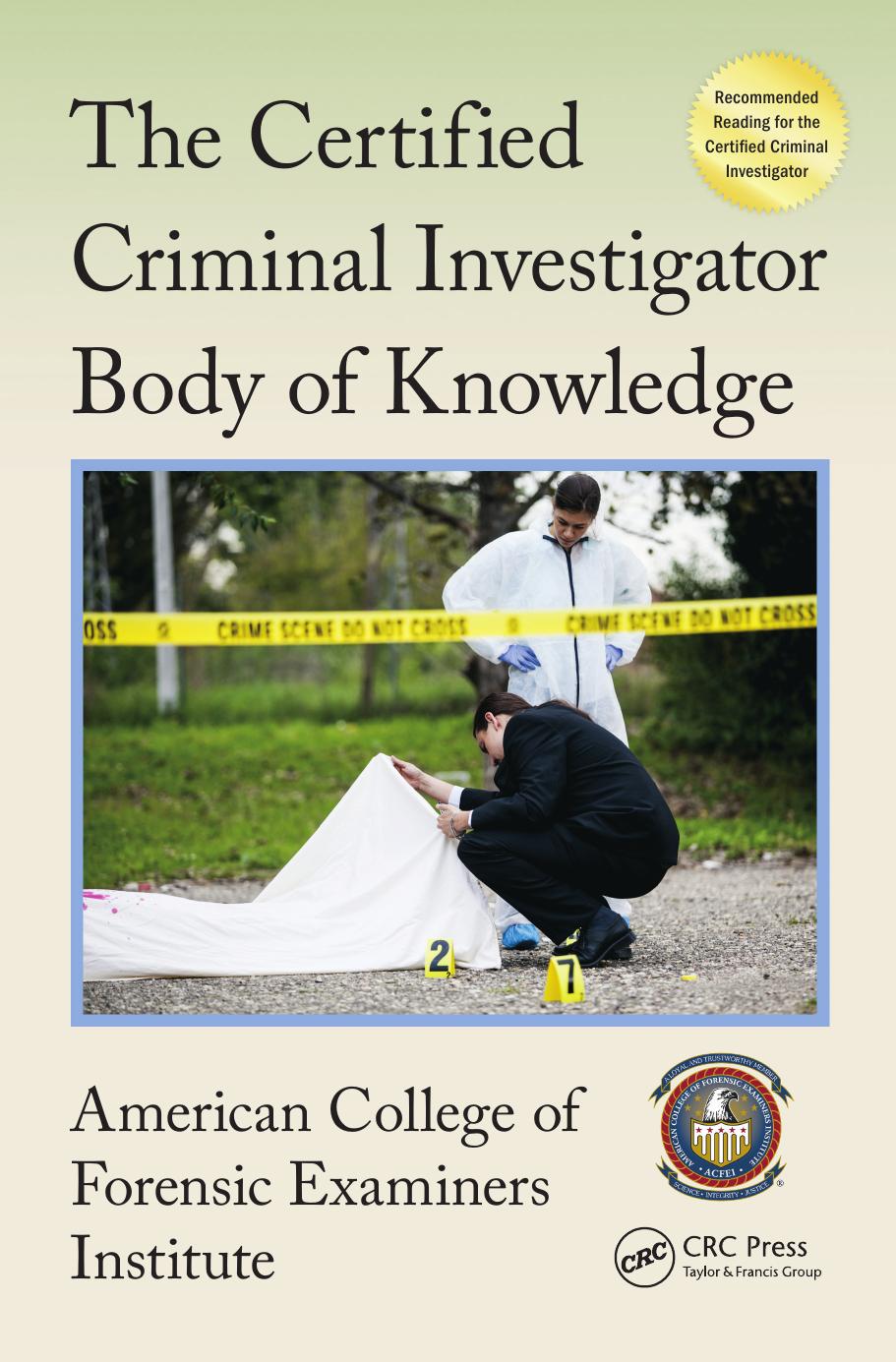
Author:American College of Forensic Examiners Institute
Language: eng
Format: epub, pdf
Publisher: CRC Press/Taylor & Francis Group, LLC
Published: 2015-05-17T04:00:00+00:00
11.3.6 Neurology and Brain Scans
Psychiatrist Lawrence Farwell developed the brain fingerprinting process based on the notion that all experiences, including committing a crime, are stored in the brain. The electrical activity of a suspect’s brain is monitored with sensors on a headband attached to a computer while the subject is exposed to words or images that are both relevant (probes) and irrelevant to the crime.
Certain information would be meaningful only to the actual perpetrator and would include such items as what was done to a victim, where the victim was taken, items removed from the victim, and items left at a scene. The subject would not see this list until the test itself was performed. Irrelevant stimuli may include a different type of weapon, different landscape or color of a room, a different modus operandi, or acts not performed during the commission of the crime.
If the brain activity shows recognition of relevant stimuli—a distinct spike called a MERMER or memory and encoding related multifaceted electroencephalographic response—then the subject has a record of the crime stored in his or her brain. Innocent people will display no such response to crime-relevant stimuli.
Download
The Certified Criminal Investigator Body of Knowledge by American College of Forensic Examiners Institute.pdf
This site does not store any files on its server. We only index and link to content provided by other sites. Please contact the content providers to delete copyright contents if any and email us, we'll remove relevant links or contents immediately.
The Thirst by Nesbo Jo(6943)
Permanent Record by Edward Snowden(5846)
The Myth of the Strong Leader by Archie Brown(5507)
Spare by Prince Harry The Duke of Sussex(5194)
A Higher Loyalty: Truth, Lies, and Leadership by James Comey(4959)
Secrecy World by Jake Bernstein(4751)
Adulting by Kelly Williams Brown(4574)
The Borden Murders by Sarah Miller(4324)
Machine Learning at Scale with H2O by Gregory Keys | David Whiting(4312)
Killers of the Flower Moon by David Grann(4054)
American Kingpin by Nick Bilton(3885)
The Secret Barrister by The Secret Barrister(3707)
Fear by Bob Woodward(3696)
Future Crimes by Marc Goodman(3597)
The Last Girl by Nadia Murad(3508)
The House on Mango Street by Sandra Cisneros(3470)
Liar's Poker by Michael Lewis(3447)
Oathbringer (The Stormlight Archive, Book 3) by Brandon Sanderson(3211)
The Social Psychology of Inequality by Unknown(3029)
